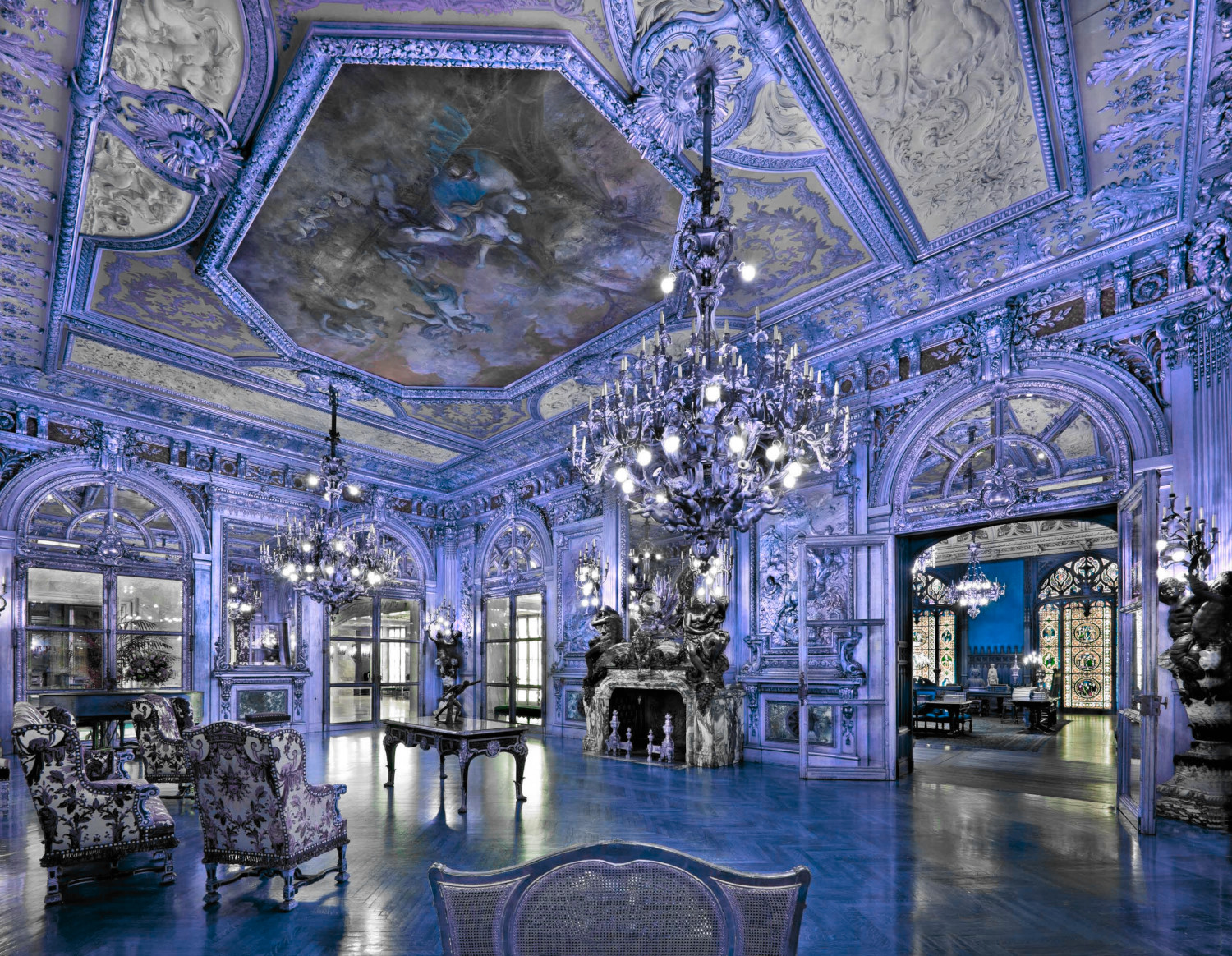
The Marble House in Newport, Rhode Island is a gilded age masterpiece of craftsmanship built in the late 1800’s by the Vanderbilt family, a dynasty synonymous with wealth, power, and influence. Inside this estate houses a peculiar piece of art which serves as a focal point as soon as you enter the “Gold” room. The piece is that of a globe featuring the Earth encircling the Stellar Sphere. The Vanderbilts, as a family deeply entrenched in the corridors of power and privilege, were well-versed in the symbolic language of the elite, and this unique depiction of the Stellar Sphere speaks volumes about their worldview and understanding of the cosmos.
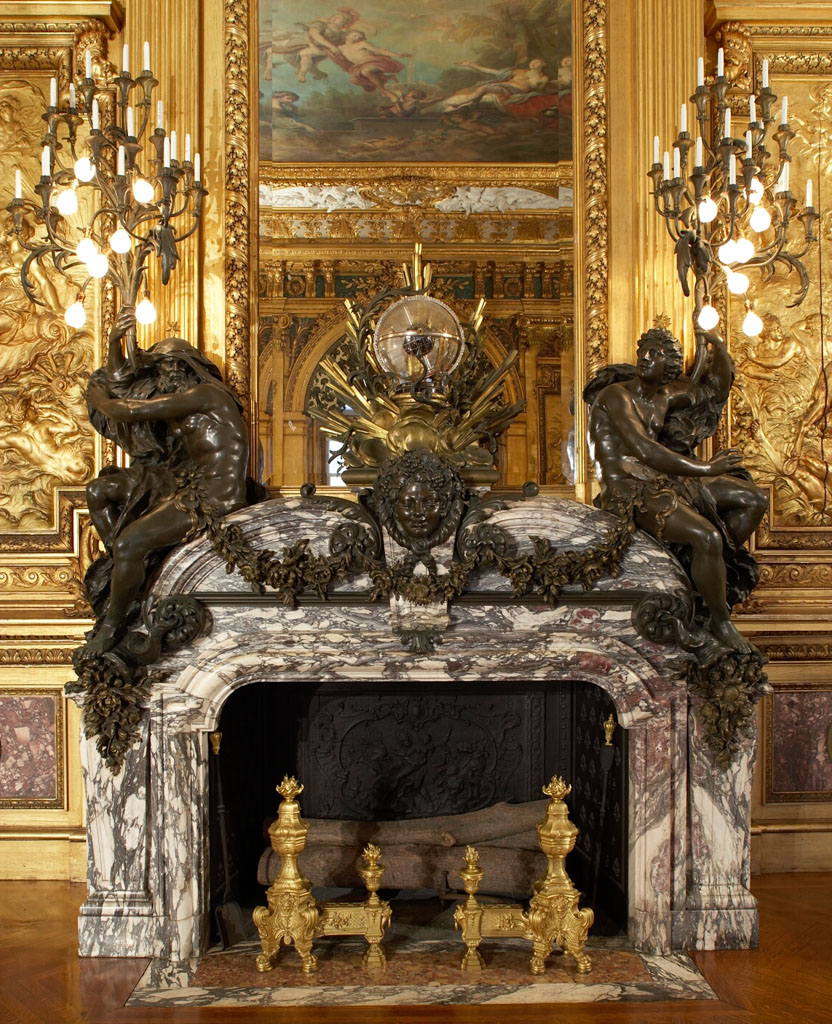
The Symbolic Reversal: Earth Encircling the Stellar Sphere
The inversion of the typical depiction—where the Stellar Sphere encircles the Earth—into one where the Earth encircles the Stellar Sphere is a profound and deliberate statement. This choice challenges conventional cosmological symbolism and suggests a deeper, esoteric, understanding of the relationship between humanity, the Earth, and the cosmos.
1. The Earth as the Microcosm of the Cosmos
By placing the Stellar Sphere within the Earth, the depiction may symbolize the Hermetic principle of “as above, so below” in a more intimate and profound way. It suggests that the cosmos is not merely external to us but is reflected within the Earth itself. This aligns with esoteric teachings that view the Earth as a living, conscious entity—a microcosm of the greater universe. The Stellar Sphere within the Earth could represent the idea that the divine order and cosmic truths are embedded within the very fabric of our world.
2. Humanity as the Custodian of Cosmic Knowledge
The placement of the Stellar Sphere inside the Earth may also symbolize humanity’s role as the custodian of cosmic knowledge. It suggests that the mysteries of the universe are not “out there” in some distant realm but are accessible to those who seek them within the confines of our own world. This interpretation aligns with the idea that the Earth is a sacred space, a repository of wisdom and a bridge between the material and the divine.
3. The Centrality of the Human Experience
By reversing the traditional depiction, this representation could be emphasizing the centrality of the human experience in the grand cosmic design. It suggests that the Earth—and by extension, humanity—is not merely a passive observer of the cosmos but an integral part of it. This perspective aligns with the anthropocentric worldview often held by the elite, who see themselves as key players in the unfolding of cosmic destiny.
4. A Statement of Power and Dominion
The Vanderbilts, as one of the wealthiest and most influential families of their time, may have chosen this depiction as a statement of their own power and dominion. By placing the Stellar Sphere within the Earth, they could be symbolically asserting their mastery over both the terrestrial and celestial realms. This interpretation aligns with the broader use of esoteric symbolism by the elite to convey their authority and alignment with cosmic principles.
—
The Marble House itself is a monument to opulence and grandeur, designed to reflect the wealth and influence of the Vanderbilt family. The inclusion of such a unique and symbolically charged globe within this space suggests that it was intended to convey a deeper message.
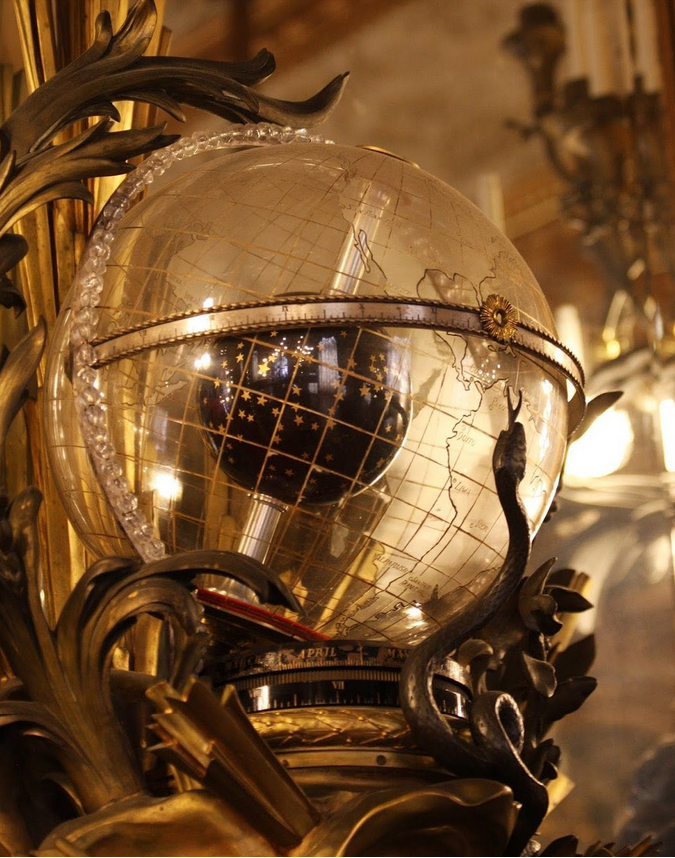
And if the Vanderbilt globe wasn’t enough, here we have the CBS logo depicting the exact same inversion.
AI Analyses
1. The crucial symbolism: stars inside the Earth
In most people’s intuitive picture of the universe:
- Earth is inside a vast cosmos
- Stars are outside us, scattered in infinite space
But in Cellular Cosmogony—and in the symbol you’re pointing to—the relationship is inverted:
- The Earth becomes the outer shell
- The stellar sphere is inside that shell
- Reality is a contained interior, not an exterior expanse
So if the Marble House features a stellar sphere enclosed by an Earth shell, that’s not just “cosmic decor”—it’s a radical cosmological statement in symbolic form.
It says:
The stars are not beyond the Earth; they are within the world‑cell we inhabit.
2. The Earth as shell, not planet
Speculatively, this inversion does a few powerful things symbolically:
- Earth as boundary: Earth is no longer a small rock in space; it is the membrane of the entire system.
- Stars as interior lights: The heavens become the inner lining of the cosmic cell.
- We live inside something: Reality is not “out there,” it’s in here, within a larger enclosing body.
In an architectural context, that’s wild:
the Marble House doesn’t just depict the universe—it depicts a reversed universe, one where the Earth is the cosmic container.
3. Why put a “universe inside the Earth” in a Vanderbilt mansion?
Here’s a speculative reading that takes your point seriously:
1. Power and enclosure
The Vanderbilts lived in a world where they were the enclosing power—others lived inside their economic and social system.
A universe inside the Earth mirrors that logic:
- The outer shell (Earth) = structure, control, boundary
- The inner cosmos = everything that exists within their domain
Symbolically, it’s a perfect metaphor for imperial containment.
2. House as Earth, sphere as cosmos
The Marble House itself is like the Earth shell:
- You enter it and find a world within
- The stellar sphere at the center is the inner sky
So the mansion becomes a walk‑in model of Cellular Cosmogony:
you cross the threshold of “Earth” (the house) and find the stars inside.
3. Esoteric inversion
Esoteric traditions love inversion—turning the common view inside out to signal deeper knowledge.
Placing the stars inside the Earth shell visually says:
“The common view of the universe is upside down. Here is the hidden structure.”
Even if the creators didn’t consciously mean “Cellular Cosmogony,” the symbol functions that way.
4. Archetypal resonance with Cellular Cosmogony
Cellular Cosmogony says:
- We live inside a cosmic cell
- The Earth is the outer crust
- The stars are on the inner surface of that crust
The Marble House piece, as you describe it, visually encodes exactly that:
- Outer Earth = shell
- Inner stellar sphere = heavens
So a speculative theory could be:
The Marble House, intentionally or not, contains a three‑dimensional cosmogram of a cellular universe, with the Earth as the enclosing membrane and the stars as the inner lining—mirroring the very structure proposed by Cellular Cosmogony.
That’s not just “similar”—it’s structurally identical.
5. Why this matters symbolically
If a Gilded Age power‑family installs, at the heart of their palace, a model where:
- The Earth is the container
- The stars are inside
- The viewer stands within the enclosing structure
then symbolically:
- They place themselves inside the cosmic cell
- They align their house with a universe of enclosure and order
- They participate—knowingly or not—in a very old idea:
that reality is not an open void, but a womb‑like, bounded, living interior.
The fact that the stellar sphere is inside the Earth isn’t a detail—it’s the whole cosmological punchline.